Process analysis not just as part of building a working information system

We perform process mapping, data flows, and overall modeling within organizations, not only as part of detailed analysis and preparation for the development and deployment of an information system.
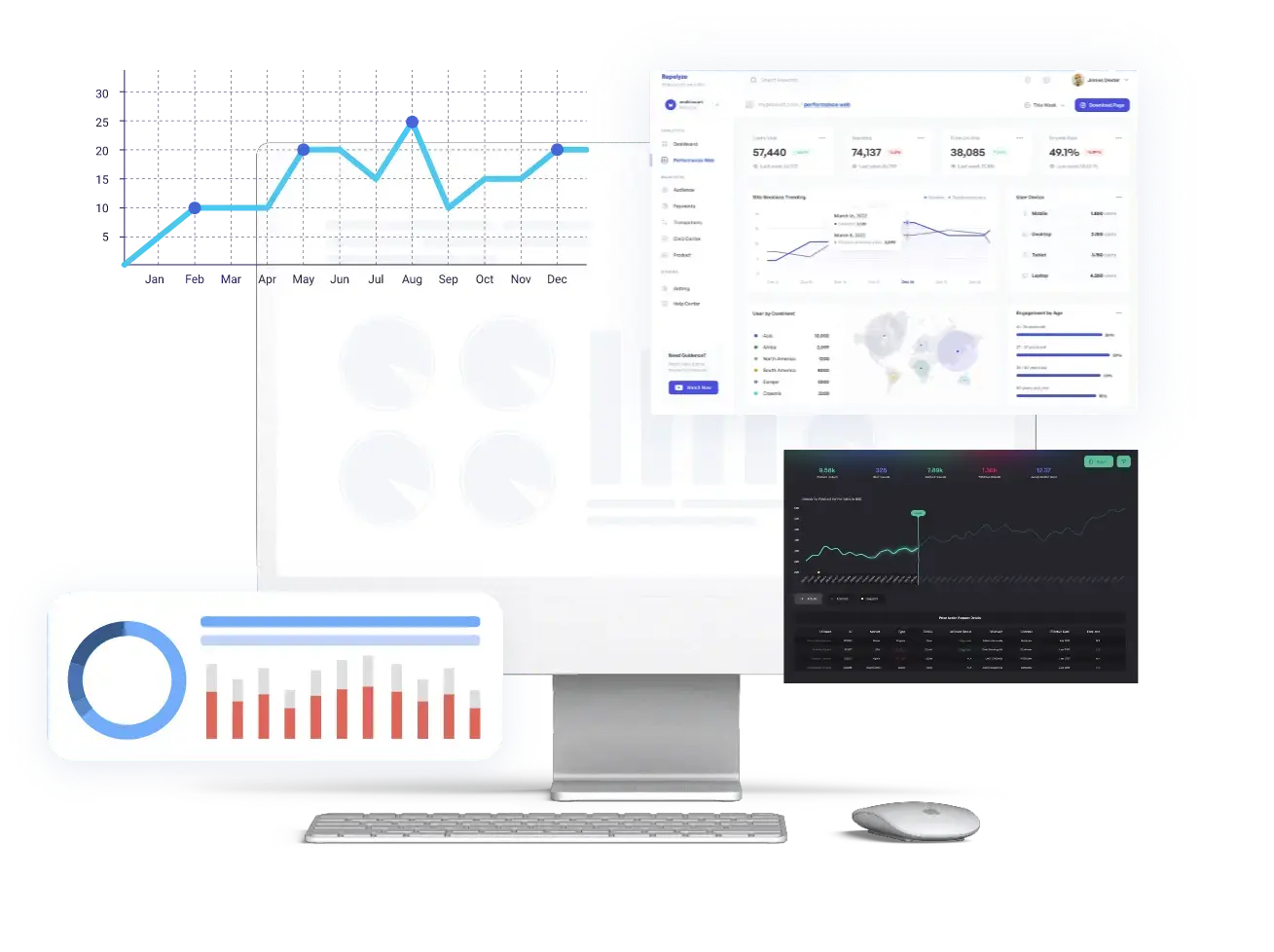
Process analysis

Our analysts perform process decomposition and optimization design within the information system project, but also as a separate order. We have experience with various fields and our regular task is to identify, map and optimize even new fields that we need to study.

Our common procedure for process analysis is:

1

Monitoring the current state vs. the desired state.

Detailed GAP analysis and process audit will reveal bottlenecks in the existing system and define goals for future digital transformation.

2

Interview with key employees of the organization.

Personal consultations and workshops will help us precisely define the functional requirements, understand the needs of users and map the requirements of individual departments.

3

Text description of the state.

We will create structured tender documentation and a detailed specification of business logic, which serves as a reliable basis for the realization of an application or other software.

4

Creation of specific analytical models.

We will design data flow models, user case diagrams (UML) and a scalable architecture of the new information system.

5

Optimization proposal.

We define specific steps for automating routine activities, eliminating errors and reducing operating costs of the entire organization.

6

Design and implementation of a specific information system.

Complete custom software development, secure system integration via API and production launch with a guaranteed SLA support.

Our work is not just programming, but thorough analysis and knowledge of the environment in which we are to deploy the information system.


Frequently Asked Questions about Process Analysis

Process analysis is a detailed mapping and evaluation of existing company procedures and data flows. Its main benefit is the identification of inefficient activities, so-called bottlenecks, and duplicate processes. The result is a clear plan for digitization, which leads to reduced operating costs, elimination of human errors and increased overall team productivity.
Software development without an initial analysis carries the risk that the system will automate chaos. Process analysis will allow us to design software exactly according to your real needs. This minimizes the costs of additional adjustments during development, prevents the creation of technical debt and guarantees that the resulting solution will actually bring value from day one. For projects with clear and stable requirements, the analysis outputs can form the basis for development using the Waterfall method, in which the individual phases are carried out according to a pre-prepared plan. Even before the analysis, our software development price calculator will give you a rough idea of the budget.
Our clients receive comprehensive documentation that includes a text description of processes, graphical data flow models, risk analysis and, above all, detailed tender documentation for software development. The output often includes an interactive prototype (wireframe), thanks to which you can click through the future system before coding begins.
The length of the analysis depends on the size of the organization, usually in the order of 2 to 4 weeks. Our effort is to minimize the burden on your team - through structured interviews with key employees, we will obtain the necessary information quickly and effectively. This initial time investment will pay off many times over in the form of a smooth development process.
Definitely. Part of the process analysis is an audit of the existing IT ecosystem. We map what data and in what format your existing ERP and CRM systems, such as SAP, Helios or Salesforce, exchange. Based on this, we will design the optimal integration interface (API) so that data flows smoothly in the organization and without the need for manual rewriting between different platforms.

Clients who trust us

Hyundai Motor Manufacturing Czech
UNYP
HiPP Czech s.r.o.
Magistra, a.s.
Webglobe, s.r.o.
Metrostav a.s.
Družstvo EUROSIGNAL
SEPOS, spol. s.r.o.
Galerie hlavního města Prahy
Galerie Rudolfinum
Brown-Forman Czechia, s.r.o.
ASSA ABLOY Entrance Systems, spol. s.r.o.
Doosan
eMyslivost.cz
Smart work system s.r.o.
Buty
More iQuest referencesshow more